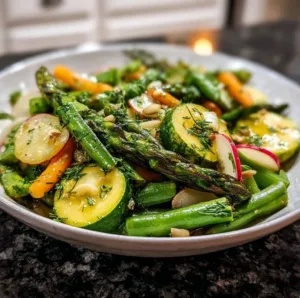
Sautéed Spring Vegetable Salad
Fresh and Flavorful Dish
INTRODUCTION
Imagine the colors of spring bursting onto your plate, vibrantly green and utterly fresh. This Sautéed Spring Vegetable Salad captures the essence of a sunlit garden, bringing together the crispness of vegetables and the zesty zing of lemon. Every bite is a reminder that food connects us to our surroundings. As you savor the tender asparagus and sweet snap peas, let this dish remind you of the simple joys found in seasonal cooking. It’s more than a salad; it’s a celebration of warm days and the bounty of nature that inspires us.
Quick Recipe Overview
- Prep Time: 10 minutes
- Cook Time: 10 minutes
- Total Time: 20 minutes
- Servings: 4
- Difficulty: Easy
- Cuisine: American
- Best Season: Spring
Why This Dish Will Delight You
- Flavor Explosion: The sautéing process enhances the natural sweetness of the vegetables, providing a symphony of flavors that dance on your palate.
- Simple Preparation: With minimal steps and a quick cooking time, this salad is perfect for busy weeknights or last-minute gatherings.
- Versatile Serving: Whether as a side dish for grilled meats or a main veggie course, this salad fits any occasion beautifully.
- Freshness Guaranteed: Using seasonal vegetables not only ensures more flavor but also brings the colors of spring to your table.
- Healthy and Wholesome: Packed with nutrients, each bite inspires you to eat well while enjoying a light meal that satisfies.
Key Ingredients for Success
- 1 cup asparagus, trimmed and cut into 2-inch pieces
- 1 cup snap peas, trimmed
- 1 cup carrots, sliced
- 1 cup radishes, quartered
- 2 tablespoons olive oil
- Salt and pepper to taste
- 1/4 cup fresh herbs (like parsley, mint, or dill), chopped
- 1/4 cup lemon juice
- 1 teaspoon Dijon mustard
- 1 tablespoon honey (optional)
Ingredient Insights for Best Results
- Asparagus: Look for firm, vibrant green stalks for optimal flavor. Thin asparagus is best for quick cooking.
- Snap Peas: Fresh snap peas should be bright and crisp; they lose sweetness once they’re past their prime.
- Carrots: Choose smaller or baby carrots for sweetness; larger ones can be woody in texture.
- Radishes: Select radishes that feel firm and smooth; they should be spicy yet refreshing when fresh.
- Fresh Herbs: Always opt for herbs with vivid colors and fragrant aromas, as they elevate the dish with every bite.
Step-by-Step Cooking Guide
- Heat the olive oil in a large skillet over medium heat.
- Add the asparagus and sauté for 2-3 minutes until tender-crisp; the bright green color indicates they are nearly done.
- Add the snap peas, carrots, and radishes, and continue to sauté for another 3-4 minutes, stirring gently to mix the flavors.
- Season the vegetables with salt and pepper; adjust to your personal taste preferences.
- In a small bowl, whisk together the lemon juice, Dijon mustard, and honey until well combined; this will create a tangy vinaigrette.
- Remove the skillet from the heat and toss the sautéed vegetables with the fresh herbs and lemon vinaigrette for a burst of fresh flavor.
- Serve the salad warm or at room temperature; it brings out the best flavors of spring.
Cooking Pro Tips
- Mind Your Heat: Sautéing at the right temperature preserves the veggies’ crunch and vibrant color.
- Time Management: Chop all vegetables before heating the skillet for a seamless cooking experience.
- Seasoning: Taste as you go; this helps in achieving the perfect balance of flavors for your palate.
- Herb Varieties: Don’t be afraid to experiment with different herbs for varied flavor profiles; the right herb can elevate the dish to new heights.
Creative Variations to Try
- Vegan Delight: Skip the honey for a completely vegan-friendly salad that everyone can enjoy.
- Mild Flavor: Reduce the amount of Dijon mustard for a smoother, less tangy dressing that suits sensitive palates.
- Spicy Kick: Add a pinch of chili flakes or a dash of your favorite hot sauce to the dressing for an exciting twist.
- Regional Flair: Incorporate seasonal vegetables unique to your region such as baby zucchini or squash for a local touch.
Pair It Perfectly
- Sides: Serve this salad alongside grilled chicken or fish for a refreshing contrast.
- Drink: Enjoy with a chilled sparkling water or herbal iced tea that complements the lightness of the salad.
- Dessert: Round off the meal with a light strawberry sorbet for a sweet finish that mirrors the freshness of the spring vegetables.
Make Ahead Tips for Efficient Cooking
- Prep Ahead: Chop vegetables and prepare the dressing in advance; store them separately in the fridge for quick assembly later.
- Storing: Keep leftover sautéed vegetables in an airtight container in the refrigerator for up to three days.
- Freezing: While best enjoyed fresh, leftovers can be frozen; just be sure to reheat gently to maintain texture.
- Reheat: Warm the salad in the microwave or in a skillet over low heat for best results.
Serve with a Touch of Elegance
- Presentation: Use a large, shallow bowl to display the vibrant colors of the salad; it invites guests to dive in.
- Cozy Vibes: Pair your salad with rustic bread for a comforting meal that encourages conversation and connection.
- Textures and Layers: Consider adding toasted nuts or seeds to your salad for an added crunch that elevates each bite.
Secrets from My Kitchen
- Fresh is Best: Use only the freshest vegetables; the quality of ingredients highly impacts the flavor and overall outcome.
- Balance of Flavors: Allow the acidity of the vinaigrette to balance the sweetness of the vegetables for a well-rounded taste.
- Experimentation: Trust your taste buds; if you feel adventurous, try adding unexpected ingredients such as feta or toasted sesame oil.
- Use a High Smoke Point Oil: For sautéing, using oils with a high smoke point is crucial to avoid burning, ensuring crispy veggies every time.
Smart Storage Solutions
- Microwave Reheating: Quickly warm portions in the microwave but keep the texture in check by using a microwave-safe cover.
- Stovetop Reheating: For better flavor, warm gently in a skillet, adding a splash of lemon juice or water to revitalize the dish.
- Texture Preservation: Avoid overcooking when reheating to maintain that delightful crunch the salad is known for.
Frequently Asked Questions
Can I make this salad ahead of time?
Yes! You can chop the veggies and prepare the dressing one day in advance, keeping them separately in the refrigerator until ready to toss and serve.
What vegetables can I substitute?
Feel free to swap in any seasonal vegetables you prefer, such as bell peppers, zucchini, or even green beans for variety.
Is this salad suitable for meal prep?
Absolutely. It stores well in the refrigerator for several days, making it a great option for meal prep or a quick work lunch.
Can I use frozen vegetables instead?
While fresh vegetables yield the best flavor and texture, frozen can work in a pinch; just be sure to thaw and dry them well before cooking.
What can I do with leftovers?
Leftover sautéed veggies can be tossed into pasta, grain bowls, or even added to omelets for a nutritious boost.
How can I make it more filling?
Adding grains like quinoa or farro will increase the heartiness of this salad, making it a satisfying main course.
Nutrition Info
- Serving Size: 1 cup
- Calories: Approx. 150
- Protein: 3g
- Carbs: 20g
- Fat: 7g
- Fiber: 5g
- Sugar: 2g
Nutrition facts are estimates and may vary.
Reflecting on the Joy of Cooking
Cooking this Sautéed Spring Vegetable Salad is more than merely creating a meal; it is a moment of connection with nature and the art of simple ingredients. It evokes the warmth of gathering with loved ones, the laughter shared, and the stories retold over dinner. Whether it’s a casual weeknight or a festive occasion, every bite signifies the joy of sharing good food and nourishing our bodies and souls. May these flavors inspire you to come together, creating lasting memories among friends and family.
A Final Encouragement
Take a step into your kitchen and relish the joy of making this Sautéed Spring Vegetable Salad. Embrace the colors, flavors, and aromas that truly celebrate the season. Share it with someone you love and bring a touch of spring into your home. Let’s cook, share, and pin this delightful recipe for everyone to enjoy!
Print
Sautéed Spring Vegetable Salad
- Total Time: 20 minutes
- Yield: 4 servings 1x
- Diet: Vegan
Description
A vibrant and fresh salad featuring seasonal spring vegetables sautéed to perfection.
Ingredients
- 1 cup asparagus, trimmed and cut into 2-inch pieces
- 1 cup snap peas, trimmed
- 1 cup carrots, sliced
- 1 cup radishes, quartered
- 2 tablespoons olive oil
- Salt and pepper to taste
- 1/4 cup fresh herbs (like parsley, mint, or dill), chopped
- 1/4 cup lemon juice
- 1 teaspoon Dijon mustard
- 1 tablespoon honey (optional)
Instructions
- Heat the olive oil in a large skillet over medium heat.
- Add the asparagus and sauté for 2-3 minutes until tender-crisp; the bright green color indicates they are nearly done.
- Add the snap peas, carrots, and radishes, and continue to sauté for another 3-4 minutes, stirring gently to mix the flavors.
- Season the vegetables with salt and pepper; adjust to your personal taste preferences.
- In a small bowl, whisk together the lemon juice, Dijon mustard, and honey until well combined; this will create a tangy vinaigrette.
- Remove the skillet from the heat and toss the sautéed vegetables with the fresh herbs and lemon vinaigrette for a burst of fresh flavor.
- Serve the salad warm or at room temperature; it brings out the best flavors of spring.
Notes
Incorporate different seasonal vegetables or herbs for variety. Perfect as a side or main dish.
- Prep Time: 10 minutes
- Cook Time: 10 minutes
- Category: Salad
- Method: Sautéing
- Cuisine: American
Nutrition
- Serving Size: 1 cup
- Calories: 150
- Sugar: 2g
- Sodium: 400mg
- Fat: 7g
- Saturated Fat: 1g
- Unsaturated Fat: 4g
- Trans Fat: 0g
- Carbohydrates: 20g
- Fiber: 5g
- Protein: 3g
- Cholesterol: 0mg