Easy Garlic Butter Baked Salmon with Asparagus: Juicy & Flavor-Packed
Garlic Butter Salmon Simplicity
INTRODUCTION
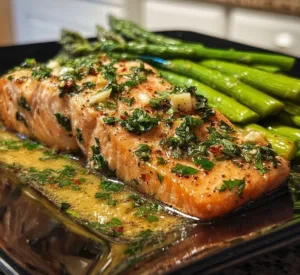
Childhood kitchens taught me that flavor carries memory. A sheet-pan of Garlic Butter Baked Salmon with Asparagus becomes a small celebration, warm. Garlic, melted butter, and lemon create a glossy finish that makes the fish sing. This Garlic Butter Baked Salmon with Asparagus is quick enough for weeknights and elegant enough for guests. It pairs with crisp asparagus for texture and air fryer salmon bites recipe for color. When the oven warms the kitchen the whole house feels like a gathering. I return to Garlic Butter Baked Salmon with Asparagus always because it is comfort and celebration in one pan.
Snapshot of the Recipe
- Prep Time | 10 minutes
- Cook Time | 12–15 minutes
- Total Time | 22–25 minutes
- Servings | 2
- Difficulty | Easy
- Cuisine | Contemporary American with bright citrus notes
- Best Season | Spring through fall for tender asparagus
Reasons to Fall for It
- Bright, buttery flavor that feels indulgent yet balanced. The garlic butter melds into the salmon, offering rich mouthfeel without overpowering the natural fish flavor.
- Fast weeknight dinner that looks special with little effort. A single sheet pan means less mess and more time to sit down and enjoy the meal.
- Versatile for many occasions from casual family dinners to a small dinner party. It pairs well with simple sides yet reads as restaurant-worthy on the plate.
- Healthy and satisfying with flaky salmon and crisp vegetables. The asparagus provides a green, slightly crunchy contrast that makes every bite interesting.
What You Will Need
- 2 fillets Salmon (Choose fresh, skin-on pieces for juicy results.)
- 1 bunch Asparagus (Trimmed and tender.)
- 1 tablespoon Olive oil (Drizzle lightly to help crisp the asparagus.)
- to taste Salt
- to taste Black pepper
- 4 tablespoons Unsalted butter (Melted.)
- 3 cloves Garlic (Minced.)
- 1 tablespoon Fresh lemon juice (Adds brightness.)
- 2 tablespoons Fresh parsley (Chopped.)
- 1 pinch Red pepper flakes (Optional for heat.)
Smart Ingredient Notes
- Salmon : Opt for skin-on fillets to keep moisture locked in; wild-caught often has a firmer texture and brighter flavor.
- Asparagus : Choose firm, straight stalks with closed tips; thinner stalks roast quickly and stay tender.
- Olive oil : Use extra virgin for flavor on the asparagus; save stronger oils for dressings if you prefer.
- Unsalted butter : Melting allows you to control seasoning and avoids overly salty results; swap part with olive oil for a lighter version.
- Garlic : Fresh minced garlic is vibrant; roasted garlic gives sweetness if you prefer a softer edge.
- Lemon juice : Adds acidity that lifts the butter and brightens the salmon; always add after cooking for pop.
- Parsley : Fresh parsley adds color and herbaceous lift; cilantro is a nice alternative for a different aroma.
- Red pepper flakes : Use sparingly if you want a whisper of heat; smoked paprika can offer a smoky alternative.
Step-by-Step Baking Directions
- Preheat the oven to 425°F. Line a baking sheet with parchment or foil for easy cleanup and even roasting.
- Trim the asparagus ends and toss with olive oil, a pinch of salt, and pepper. Spread asparagus in a single layer on one side of the baking sheet so it roasts rather than steams.
- Pat the salmon fillets dry and season lightly with salt and pepper on both sides. Place the fillets skin-side down on the other side of the pan, leaving space between pieces for heat circulation.
- In a small bowl combine melted butter, minced garlic, and fresh lemon juice. Spoon or brush half of the butter mixture over the salmon and a touch onto the asparagus. Technique note: brushing early helps the garlic infuse into the fish as it heats.
- Roast for 10 to 12 minutes depending on thickness, or until salmon flakes easily with a fork and asparagus is tender-crisp. Timing tip: check at 10 minutes for thinner fillets to avoid overcooking.
- Remove from oven and immediately spoon remaining garlic butter over the hot fish so the butter pools and carries flavor. Let rest for a minute; the salmon will continue to set and stay juicy.
- Finish with chopped parsley and a pinch of red pepper flakes if using. Serve warm. Technique note: if your asparagus needs more color, slide it under the broiler for 1 minute while watching closely.
Pro Techniques & Timing
- Temperature control matters for flaky, moist salmon. Baking at 425°F quickly seals the outside while allowing the center to stay tender, so preheat the oven thoroughly.
- Use skin-on fillets to protect the flesh from direct heat. The skin also crisps up a bit and makes lifting the fillet easier for serving.
- Apply fresh lemon after cooking for the brightest citrus note. Acid added before baking mellows a lot, but post-bake lemon feels lively against butter.
- Rest the salmon briefly after baking. A one-minute rest helps juices redistribute and keeps the texture silky rather than crumbly.
Flavor Variations to Try
- Vegan swap: Replace salmon with thick-cut marinated tofu and swap butter for vegan butter or olive oil. Roast with asparagus and garlic for a satisfying plant-based version that keeps the same aroma and roasted texture.
- Milder profile: Omit red pepper flakes and use only a light sprinkle of lemon zest instead of extra juice. This version is delicate and lets the natural salmon taste shine for picky eaters.
- Spicy kick: Add a teaspoon of harissa or chili paste to the melted butter for an aromatic, warm heat. It pairs wonderfully with a squeeze of lime and a few cilantro leaves.
- Regional twist: Stir in a teaspoon of smoked paprika and a splash of pomegranate molasses for a smoky-sweet Mediterranean-inspired finish. Garnish with chopped mint for freshness.
Best Sides and Sips
- Sides: Serve with buttery new potatoes, fluffy rice pilaf, or a lemony quinoa for a wholesome plate. A crisp green salad with a tangy vinaigrette cuts through the richness.
- Drink: A chilled glass of citrusy white wine or a sparkling water with lemon pairs beautifully. For a non-alcoholic option, iced green tea with a slice of lemon echoes the dish’s brightness.
- Dessert: Finish simply with a fruit tart, lemon sorbet, or fresh berries tossed with a touch of honey and mint to keep the meal light and refreshing.
Prep and Make-Ahead Notes
- Prep: Trim asparagus and mince garlic a day ahead, storing them separately in airtight containers. Butter mixture can be mixed and refrigerated for up to 24 hours; bring to room temperature before using.
- Store: Cooked salmon and asparagus keep well in an airtight container in the refrigerator for up to 2 days. Keep any sauce separate when possible to preserve texture.
- Freeze: It is not recommended to freeze cooked salmon with asparagus for best texture, but raw salmon fillets can be frozen for up to 3 months and thawed overnight in the refrigerator.
- Reheat: Reheat gently in a low 300°F oven for 8–10 minutes to avoid drying. Adding a splash of water or an extra pat of butter helps restore moisture.
Serving and Presentation Tips
- Plating: Serve the salmon whole on the skin side up for a rustic look or slice into two pieces and fan slightly. Arrange asparagus neatly alongside and spoon warm garlic butter visibly over the fillet.
- Garnish: A scatter of chopped parsley, lemon wedges, and a light sprinkle of red pepper flakes make the plate pop visually and add aroma.
- Cozy vibes: Plate on warm dishes and dim the lights slightly to create an inviting, homey atmosphere. A linen napkin and simple centerpiece make a weeknight feel like an occasion.
Little Kitchen Secrets
- Salt early on vegetables but finish fish more gently. Vegetables can handle and benefit from early seasoning while fish is best with lighter salt before cooking and a final adjustment after.
- Use room temperature butter to help it emulsify with lemon juice. Cold butter will resist blending and won’t coat the salmon as evenly.
- Hot pan vs oven: A quick sear in a hot skillet before baking gives extra color, but isn’t necessary; the oven does a fine job and simplifies cleanup.
- Use the broiler briefly to crisp the asparagus tips. One minute under high heat can add a roasted edge without drying the salmon below.
Storing and Reheating Advice
- Refrigeration: Keep leftovers in an airtight container and eat within 48 hours for best texture and flavor. Pack salmon and asparagus side by side but not smothered in sauce.
- Microwave: If using a microwave, cover and heat at 50 percent power in short intervals to avoid overcooking; add a teaspoon of water or butter to preserve moisture.
- Stovetop: Warm gently in a skillet over low heat with a splash of stock or butter, turning once to keep the exterior from drying out. This method helps revive texture more gracefully than high heat methods.
- Texture preservation: Avoid prolonged reheating; flaky salmon becomes dry if cooked too long. Reheat just until warmed through and serve immediately.
Common Questions Answered
How do I know when the salmon is done?
Salmon is done when it flakes easily with a fork and the flesh is opaque with a faintly translucent center depending on thickness. Use a thermometer for precision: aim for 125°F to 130°F for medium, 140°F for well done. Pull it from the oven a few degrees under target as it will carryover cook while resting.
Can I use frozen salmon fillets?
Yes, you can bake from frozen but expect longer cooking times and a slightly different texture. Thaw overnight for best results and pat dry before seasoning to prevent excess moisture.
Is it okay to use other vegetables?
Absolutely. Broccolini, green beans, or thinly sliced zucchini roast well alongside salmon and complement the garlic butter. Adjust roasting times for vegetables that require longer and position them to avoid undercooking.
Can I make this without butter?
Yes, substitute olive oil or a vegan butter for a lighter or dairy-free version. Olive oil adds fruitier notes while vegan butter preserves a similar richness without dairy.
How spicy will it be with red pepper flakes?
A pinch adds a warm background heat but keeps the dish approachable. Add more in small increments and taste with a bit of lemon to balance the spice if needed.
What’s the best way to reheat without drying the salmon?
Warm slowly at low oven temperature or on the stovetop with a splash of stock or butter. Covering the pan helps trap steam and keeps the flesh moist without overcooking.
Nutrition Info
- Serving Size | 1 fillet with asparagus
- Calories | Approximately 420 kcal
- Protein | 34 g
- Carbs | 6 g
- Fat | 28 g
- Fiber | 2 g
- Sugar | 1 g
Nutrition facts are estimates and may vary based on exact ingredients and portion sizes.
A Note from the Kitchen
Food connects people, seasons, and small moments into a warm whole. This Garlic Butter Baked Salmon with Asparagus feels like that kind of dish—rooted in simple ingredients, lifted by technique, and meant to be shared. Cooking it brings the hum of conversation and the comfort of a home-cooked meal without hours of fuss. It’s a recipe that honors good produce, gentle hands, and the idea that flavor is happiest when it’s passed across the table to someone else.
Final Encouragement
Give this Garlic Butter Baked Salmon with Asparagus a try tonight and notice how a few careful steps make dinner feel special. Pin it, share it, or keep it for your favorite weeknight celebration, and enjoy the flaky, buttery bites.
Print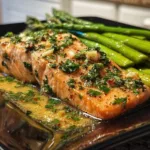
Easy Garlic Butter Baked Salmon with Asparagus
- Total Time: 25 minutes
- Yield: 2 servings 1x
- Diet: Pescatarian
Description
A simple yet elegant dish of baked salmon with garlic butter and asparagus, perfect for weeknights and special occasions.
Ingredients
- 2 fillets Salmon (skin-on)
- 1 bunch Asparagus (trimmed)
- 1 tablespoon Olive oil
- to taste Salt
- to taste Black pepper
- 4 tablespoons Unsalted butter (melted)
- 3 cloves Garlic (minced)
- 1 tablespoon Fresh lemon juice
- 2 tablespoons Fresh parsley (chopped)
- 1 pinch Red pepper flakes (optional)
Instructions
- Preheat the oven to 425°F. Line a baking sheet with parchment or foil.
- Trim the asparagus ends and toss with olive oil, salt, and pepper. Spread in a single layer on one side of the baking sheet.
- Pat the salmon fillets dry and season with salt and pepper. Place skin-side down on the other side of the pan.
- Combine melted butter, minced garlic, and lemon juice in a small bowl. Spoon half over the salmon and a touch onto the asparagus.
- Roast for 10 to 12 minutes until salmon flakes easily and asparagus is tender-crisp.
- Remove from the oven and spoon remaining garlic butter over the salmon. Let rest for a minute.
- Finish with chopped parsley and red pepper flakes if desired. Serve warm.
Notes
Use skin-on fillets for juiciness. Adjust cooking times based on salmon thickness.
- Prep Time: 10 minutes
- Cook Time: 15 minutes
- Category: Main Course
- Method: Baking
- Cuisine: American
Nutrition
- Serving Size: 1 fillet with asparagus
- Calories: 420
- Sugar: 1g
- Sodium: 400mg
- Fat: 28g
- Saturated Fat: 8g
- Unsaturated Fat: 16g
- Trans Fat: 0g
- Carbohydrates: 6g
- Fiber: 2g
- Protein: 34g
- Cholesterol: 75mg