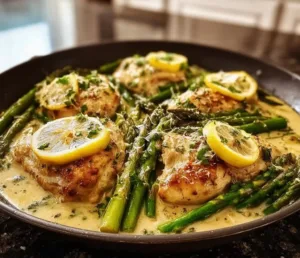
Creamy Lemon Chicken with Asparagus
Zesty Creamy Weeknight Meal
INTRODUCTION
Hola echoes in the imagination as a kitchen warms and citrus lifts the air, and this Creamy Lemon Chicken with Asparagus carries that bright, comforting spirit into a simple skillet dinner. A childhood of tortillas and mercados inspired a love for bold, homey flavors and that same joy shows up when searing chicken and stirring a silky lemon sauce; Creamy Lemon Chicken with Asparagus brings sunshine to the plate and slow, easy satisfaction to the table. The balance of tangy lemon, rich cream, and tender asparagus makes Creamy Lemon Chicken with Asparagus feel both special and effortless, and for a twist try a related recipe like a creamy lemon butter chicken for a buttery cousin to this dish.
Quick Recipe Snapshot
- Prep Time: 10 minutes | Cook Time: 20 minutes | Total Time: 30 minutes | Servings: 2 | Difficulty: Easy | Cuisine: Comfort | Best Season: Spring and Summer
Reasons to Fall for It
- Bright, balanced flavor that wakes up the palate. The lemon zest and juice cut through the richness of the cream, creating a lively harmony that feels indulgent without being heavy.
- Ridiculously simple technique that suits weeknights. A quick sear, a brief sauté, and a short simmer mean dinner comes together in under 30 minutes with minimal fuss.
- Elegant enough for company, cozy enough for solo nights. The creamy lemon sauce looks and tastes like a restaurant dish but relies on pantry-friendly ingredients.
- Healthy green asparagus adds freshness and texture. Each bite offers a snap of verdant flavor that complements the tender chicken.
What You Will Need
- 2 chicken breasts
- 1 bunch of asparagus
- 1 cup heavy cream
- 1 lemon (zested and juiced)
- 2 tablespoons olive oil
- 2 cloves garlic (minced)
- Salt and pepper to taste
- Parmesan cheese (for garnish, optional)
Ingredient Swap Notes
- Chicken breasts : Swap for boneless turkey cutlets or thin-sliced beef if you prefer a different protein; look for even thickness to ensure uniform cooking.
- Asparagus : Choose firm, bright-green spears with closed tips; thin stalks cook faster while thick stalks may need trimming or peeling.
- Heavy cream : For a lighter option, use half-and-half or a blend of milk and a tablespoon of cornstarch to thicken; this keeps creaminess with fewer calories.
- Lemon : Fresh lemons give the cleanest, brightest flavor; bottled juice will work in a pinch but lacks the aromatic oils from zest.
- Garlic : Freshly minced garlic is fragrant and sweet when sautéed briefly, while pre-minced jars can be more pungent and less vibrant.
Step-by-Step Cooking Directions
- Heat olive oil in a large skillet over medium heat.
- Season the chicken breasts with salt and pepper and cook in the skillet until browned and cooked through, about 6-7 minutes per side. Remove and set aside.
- In the same skillet, add minced garlic and sauté until fragrant.
- Add asparagus to the skillet and cook for 3-4 minutes until tender.
- Lower the heat and stir in heavy cream, lemon juice, and lemon zest. Mix well and let it simmer for a few minutes.
- Return the chicken to the skillet, coating it in the lemon cream sauce.
- Serve hot, garnished with Parmesan cheese if desired.
Technique notes: For even cooking, pound or butterfly thick chicken breasts to roughly 1/2-inch thickness before seasoning. Use medium heat so the chicken browns without burning and the cream simmers gently; boiling can cause separation. If the sauce seems too thin, simmer a minute longer or add a small pinch of cornstarch dissolved in water to thicken.
Pro Techniques & Timing
- Even thickness ensures predictable cooking times. Using a meat mallet or rolling pin to gently flatten chicken makes a uniform sear and prevents overcooking the edges while the center finishes.
- Rest the chicken briefly after cooking to lock in juices. Letting the chicken sit on a plate for 5 minutes before returning it to the sauce keeps each bite tender and moist.
- Toss asparagus in the hot pan just long enough to keep a pleasant snap. Overcooking leads to limp, dull green spears rather than the vibrant, tender-crisp texture that contrasts the creamy sauce.
- Warm the pan before adding cream to prevent curdling. Lowering the heat and stirring continuously when the dairy goes in helps the sauce stay smooth and glossy.
Flavorful Variations to Try
- Vegan swap: Replace chicken with thick slices of marinated tofu and use full-fat coconut milk or a cashew cream for richness; roast asparagus for extra caramelized flavor. The lemon lifts the plant-based cream and keeps the dish bright and satisfying.
- Milder family-friendly version: Omit extra lemon zest and reduce juice slightly, relying more on cream and a light sprinkle of Parmesan to keep flavors gentle for children or sensitive palates. Serve with buttered noodles to mellow the acidity.
- Spicy kick: Add a pinch of red pepper flakes when sautéing the garlic and finish with a touch of smoked paprika for warm heat. The spice plays nicely with lemon and gives the sauce an extra layer of depth.
- Regional twist: Stir in a teaspoon of Dijon mustard and a splash of chicken stock for a French-inspired take, or add chopped capers and a little white wine vinegar for a tangy Mediterranean vibe.
Perfect Sides and Drinks
- Sides: Serve over al dente pasta, creamy polenta, or alongside buttery mashed potatoes to soak up the lemon cream sauce. A simple arugula salad dressed with olive oil and lemon balances richness with peppery freshness.
- Drinks: A crisp white wine alternative like sparkling water with a lemon wedge or a citrusy iced tea complements the bright sauce and cleanses the palate. For a non-alcoholic adult pairing, try chilled pomegranate spritz for a fruity contrast.
- Dessert: Finish lightly with lemon sorbet or a small slice of almond cake to echo the citrus notes without overwhelming the meal.
Make-Ahead and Freezing Notes
- Prep: Trim asparagus and mince garlic ahead and refrigerate in labeled containers for up to 24 hours; pre-zest lemons and store the zest in a small airtight container. Pound or butterfly chicken and keep covered until cooking to speed weeknight prep.
- Store: Leftover chicken with sauce keeps well in the refrigerator for up to 3 days in an airtight container. Reheat gently to avoid separating the cream.
- Freeze: For longer storage, freeze components separately; cooked chicken and sauce can be frozen for up to 2 months but expect slight texture changes. Thaw overnight in the refrigerator before reheating slowly on the stovetop.
Serving and Presentation Ideas
- Plate each chicken breast atop a nest of pasta or polenta and spoon hot lemon cream and asparagus around the meat for an inviting look. Garnish with finely grated Parmesan and a few thin lemon slices for brightness and a polished finish.
- Serve family style in the skillet so guests can help themselves, creating a warm, communal vibe at the table. Scatter chopped fresh parsley for color and a fresh herbal note.
- Use neutral-colored plates to let the golden sauce and green asparagus pop visually, and pair with simple linens and warm lighting to make the meal feel cozy and intentional.
Little Kitchen Secrets
- Salt in stages for layered flavor: Season the chicken before searing and taste the sauce at the end to adjust seasoning rather than over-salting early on. This prevents flatness and brings brightness to both protein and sauce.
- Zest before juicing to capture essential oils: The lemon zest holds aromatic oils that are lost once the lemon is cut, so zest first and then squeeze for maximum citrus impact.
- Use a hot pan for a proper sear: A well-heated skillet creates a caramelized crust that adds flavor complexity and a pleasing texture contrast to the creamy sauce.
- Finish with cold butter for gloss: Stir in a small pat of cold butter off the heat to give the sauce a silky sheen and a rounded flavor that feels luxurious without extra heaviness.
Storing and Reheating Advice
- Microwave + stovetop: Reheat gently on the stovetop over low heat while covering the pan to prevent splatter; add a splash of milk or stock if the sauce tightens. The microwave works for quick warming but stir every 20 seconds to avoid hot spots and separation.
- Texture preservation: Avoid high heat when reheating to keep the cream from separating and the chicken from drying. Adding a small splash of liquid and stirring slowly brings back a smooth, saucy consistency.
Common Questions Answered
How can I tell when the chicken is fully cooked?
Check the thickest part of the breast with a meat thermometer; it should read 165 F. If you do not have a thermometer, cut a thin slice to ensure there is no pink and the juices run clear.
Can I use frozen asparagus for this recipe?
Frozen asparagus can work but may become softer and release more water, diluting the sauce. Thaw and pat dry thoroughly before adding to the skillet to reduce excess moisture and achieve better texture.
Is there a dairy-free alternative that still stays creamy?
Yes, use a full-fat coconut milk or a smooth cashew cream blended until silky for a dairy-free yet rich sauce. Taste and adjust lemon because plant-based creams can be slightly sweeter than dairy heavy cream.
How do I prevent the sauce from curdling?
Lower the heat before adding cream and stir continuously as it warms slowly; avoid boiling once cream is in the pan. Bringing the chicken back into the sauce off heat helps the flavors meld without high temperatures.
Can I make this for a larger crowd?
Multiply ingredients and use multiple skillets or a large oven-safe pan to maintain searing temperature. Cook chicken in batches to avoid crowding the pan and losing that golden crust that adds flavor.
What side pairs best with this for a light meal?
A bright, peppery arugula salad with shaved Parmesan and a lemon vinaigrette keeps the meal light while echoing the citrus notes. Simple roasted fingerling potatoes also match the sauce beautifully for a heartier option.
Nutritional Breakdown
- Serving Size: 1 plate (approximate)
- Calories: 520 kcal (estimate)
- Protein: 38 g
- Carbs: 8 g
- Fat: 36 g
- Fiber: 2 g
- Sugar: 3 g
Nutrition facts are estimates and may vary.
A Note from the Kitchen
This dish is a small celebration of shared kitchens and the way a single citrus fruit can lift a meal into bright territory. It nods to traditions where food gathers people, balancing richness with freshness for real, everyday comfort. Making Creamy Lemon Chicken with Asparagus feels like passing along a simple, soulful recipe that encourages conversation and lingering at the table with people you care about.
Ready to Cook and Share
Give this Creamy Lemon Chicken with Asparagus a try on a busy weeknight or when guests arrive; it is forgiving, quick, and full of flavor. If it becomes part of your rotation, pin and share it with friends who love easy, elegant dinners, and enjoy the little ritual of searing, simmering, and serving a dish that tastes like sunshine.
Print
Creamy Lemon Chicken with Asparagus
- Total Time: 30 minutes
- Yield: 2 servings 1x
- Diet: Dairy
Description
A bright, creamy dish of seared chicken breasts coated in a silky lemon sauce with tender asparagus, perfect for weeknight dinners.
Ingredients
- 2 chicken breasts
- 1 bunch of asparagus
- 1 cup heavy cream
- 1 lemon (zested and juiced)
- 2 tablespoons olive oil
- 2 cloves garlic (minced)
- Salt and pepper to taste
- Parmesan cheese (for garnish, optional)
Instructions
- Heat olive oil in a large skillet over medium heat.
- Season the chicken breasts with salt and pepper and cook in the skillet until browned and cooked through, about 6-7 minutes per side. Remove and set aside.
- In the same skillet, add minced garlic and sauté until fragrant.
- Add asparagus to the skillet and cook for 3-4 minutes until tender.
- Lower the heat and stir in heavy cream, lemon juice, and lemon zest. Mix well and let it simmer for a few minutes.
- Return the chicken to the skillet, coating it in the lemon cream sauce.
- Serve hot, garnished with Parmesan cheese if desired.
Notes
For even cooking, pound or butterfly thick chicken breasts to roughly 1/2-inch thickness before seasoning. Pair the dish with a fresh arugula salad for a complete meal.
- Prep Time: 10 minutes
- Cook Time: 20 minutes
- Category: Main Course
- Method: Skillet Cooking
- Cuisine: Comfort
Nutrition
- Serving Size: 1 plate
- Calories: 520
- Sugar: 3g
- Sodium: 500mg
- Fat: 36g
- Saturated Fat: 20g
- Unsaturated Fat: 12g
- Trans Fat: 0g
- Carbohydrates: 8g
- Fiber: 2g
- Protein: 38g
- Cholesterol: 100mg