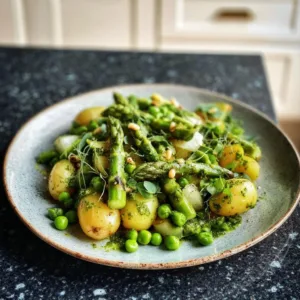
British Spring Salad
Spring Greens and Potatoes
A Kitchen Memory
Growing up between sunlit markets and small home kitchens taught an important lesson: food stitches stories together. I carry that lesson into this British Spring Salad, where waxy Jersey royals meet a punchy wild garlic pesto and blanched greens. The British Spring Salad is simple enough for a quick supper and special enough to lay down at a weekend table. It lifts ordinary spring produce with pine nuts, capers and a scatter of pea shoots until each bite feels like a crisp, green conversation. If you love bright, textural salads try 30-minute strawberry spinach salad and this British Spring Salad.
Quick Recipe Snapshot
- Prep Time: 15 minutes
- Cook Time: 12 minutes
- Total Time: 27 minutes
- Servings: 4 generous portions
- Difficulty: Easy
- Cuisine: British spring/seasonal
- Best Season: Spring and early summer
Reasons to Fall for This Salad
- Bright, clean flavors: Wild garlic pesto and pea shoots give a fresh green aroma that wakes up the palate; pine nuts add a warm, toasty contrast for balance. This salad feels springlike and uncluttered, perfect when you want vegetables to sing.
- Textural delight: Creamy Jersey royal potatoes, crisp asparagus and tender broad beans create a pleasing mix of bite and softness. Every forkful offers contrast so the meal never feels one-note.
- Quick to assemble: Blanching and a short boil keep hands-on time minimal and the dish weeknight-friendly. It is one of those recipes that looks like you labored longer than you did.
- Versatile for occasions: Serve it alongside roasted chicken for a casual dinner or present it on a platter for a bright buffet table. It reads as both humble and celebratory depending on how you plate it.
Fresh Ingredients for Spring
- 500g Jersey royal potatoes
- 150g Frozen broad beans
- 150g Frozen garden peas
- 250g Asparagus
- Wild garlic pesto
- 75g Wild garlic leaves
- A small handful basil leaves
- 150ml Olive oil
- 20g Pine nuts
- 1 tsp Capers
- 10g grated Pecorino
- Handful of pea shoots
- Cracked black pepper
- Pinch of Maldon Salt
Ingredient Notes and Swaps
- Jersey royal potatoes : Swap for baby new potatoes if you cannot find Jersey royals; choose waxy potatoes so they hold shape after boiling and have a buttery mouthfeel.
- Frozen broad beans : If using fresh broad beans, shell and blanch them for optimal texture; frozen ones are convenient and retain a bright green color.
- Frozen garden peas : Frozen peas are picked at peak and often sweeter than “fresh” supermarket peas; they also blanch quickly for even cooking.
- Asparagus : Choose spears that are firm and vibrant green with tightly closed tips; thicker spears can be halved lengthwise for even cooking.
- Wild garlic pesto : If unavailable, make a quick pesto with basil, lemon, olive oil and garlic to capture the herbaceous lift.
- Wild garlic leaves : Check for glossy, unblemished leaves and a strong, fresh garlicky aroma; avoid wilted or spotted leaves.
- Olive oil : Use a fruity extra virgin olive oil for flavor; cheaper oils will dilute the pesto’s brightness.
- Pine nuts : Toast lightly before blending for deeper nutty notes; sunflower seeds make a budget-friendly swap.
- Capers : Rinse if very salty; they add a vinegary pop that contrasts the rich potatoes.
- Pecorino : Substitute with Parmesan for a milder tang; grate finely so it melts into the warm potatoes.
- Pea shoots : Add at the last minute for crunch and a sweet pea scent; watercress is a peppery alternative.
- Cracked black pepper : Use a coarse grind for bursts of heat; freshly ground is more aromatic than pre-ground.
- Maldon Salt : Flaky salt finishes elegantly; kosher salt works but will sit differently on the tongue.
Step-by-Step Assembly Guide
- Start by preparing the wild garlic pesto. In a food processor or blender add the pesto ingredients and blitz until it forms a paste, this can be as chunky or smooth as you like. It will be vibrant green from the wild garlic leaves. Technique note: pulse first to break down leaves, then stream in the olive oil to emulsify and keep the color bright.
- Set aside. Keep the pesto covered so it does not oxidize and brown; a little extra oil on top helps preserve the color.
- Next cook the jersey royal potatoes. If any of them are larger than the other, cut them in half. Place them in a large pan of water and bring to the boil and then reduce to a simmer. Cook for 10 minutes until they feel tender when inserted with a knife. Technique note: start potatoes in cold water so they cook evenly through.
- While the potatoes are cooking bring a second pan of water up to the boil. Once boiling blanch your asparagus, peas and broad beans for 1 minutes until just tender. Remove the pan from the heat and drain. Technique note: shock vegetables in iced water if you want to preserve an electric green for a buffet.
- Once the potatoes are cooked, drain them too and allow to steam for a minute. After this toss them in 2/3 of the wild garlic pesto. Technique note: warm potatoes absorb flavors beautifully, so tossing while hot ensures the pesto clings.
- On a large serving platter spoon on the warm pesto potatoes. Top with the blanched asparagus, broad beans and peas. Technique note: arrange vegetables with height and alternating colors to make the platter feel abundant.
- Drizzle with the remaining pesto, some cracked black pepper and some Maldon Salt. Garnish with the fresh pea shoots and serve. Beginner-friendly tip: taste for seasoning and add capers or extra Pecorino if you like more acidity or salt.
Pro Tips from the Stove
- Timing matters: Stagger boiling times so potatoes and greens finish together; start potatoes first and only boil greens briefly for sparkle. This keeps textures distinct and prevents overcooking the delicate vegetables.
- Temperature contrast: Serving with warm potatoes and cool pea shoots creates a pleasurable temperature interplay that heightens flavor perception. Try to plate immediately so heat meets cool components on the fork.
- Pesto texture: A chunkier pesto gives bursts of herb, while a smoother emulsion coats potatoes evenly; choose based on whether you want pockets of intensity or an even herb flavor.
- Flavor layers: Add capers and Pecorino gradually, tasting as you go; they can quickly swing the salad from bright to assertive, so balance is key.
Ways to Change It Up
- Vegan swap: Omit the Pecorino and use toasted sunflower seeds for nuttiness and a squeeze of lemon for acidity. This keeps the salad deeply flavorful and entirely plant based.
- Milder profile: Reduce wild garlic and increase basil to make the pesto gentler and more familiar for sensitive palates. A touch of lemon zest brightens without adding heat.
- Add heat: Scatter crushed red pepper flakes into the pesto or finish with a drizzle of chili oil to add a warming lift across the greens. It pairs beautifully with the sweet peas.
- Regional twist: Fold in chopped mint and coriander for a Mediterranean-meets-UK vibe, or swap Pecorino for sharp cheddar for a homier, rustic twist that feels comfort-forward.
Perfect Pairings
- Sides: Serve with crusty bread or a warm lentil tray bake to add protein and soak up any extra pesto; a light grain salad on the side also complements textures.
- Drinks: A crisp, non-alcoholic elderflower lemonade or a citrusy sparkling water refreshes the palate and matches the herbaceous notes. For adults, a chilled light-bodied white wine pairs well.
- Dessert: Follow with a lemon posset or a bowl of fresh strawberries and cream to echo the salad’s bright finish and keep the menu spring-light.
Prep and Make-Ahead Notes
- Prep: Make the pesto a day ahead and keep refrigerated in a jar topped with oil; it will intensify in flavor overnight. Potatoes can be boiled and cooled, then gently reheated before tossing with pesto.
- Store: Keep components separately if possible—potatoes, blanched greens and pesto—to preserve texture for up to 2 days in the fridge.
- Freeze: Pesto freezes well in ice cube trays; transfer cubes to a bag and pop out portions as needed. Avoid freezing blanched vegetables in the salad as they lose firmness.
- Reheat: Warm potatoes in a low oven or gently on the stovetop with a splash of water to prevent drying; reheat only until just warm so pea shoots and asparagus stay crisp.
Plating and Warmth
- Plating: Use a wide, shallow platter to layer warm potatoes as the base and build upward with asparagus and peas; this invites communal sharing and shows off colors. Scatter pea shoots and a final grating of Pecorino for shimmer.
- Presentation: Leave some pesto visible on top rather than fully mixing for a rustic, hand-tossed look; sprinkle pine nuts for a final textural spark.
- Cozy vibes: Serve with warm linens and simple flatware so the salad feels like a neighborhood meal rather than a formal course.
Little Kitchen Secrets
- Toast pine nuts: Toast for one to two minutes in a dry pan until fragrant to deepen the pesto’s flavor; cool before blending to preserve oils.
- Rescue bright color: A splash of lemon juice in the blanching water can help retain green hues if your vegetables look dull.
- Oil seal: When storing pesto, press a thin layer of oil over the surface to keep it from browning and losing vibrancy.
- Gentle handling: Use a wide spoon to fold vegetables into potatoes to avoid crushing and to keep the dish visually airy.
Keeping Texture After Storage
- Microwave + stovetop: To revive refrigerated potatoes, warm them briefly in the microwave for 30 to 60 seconds then finish in a hot pan with a drizzle of oil to restore a slight crust. For stovetop reheating, use medium heat and add a touch of water or oil to prevent sticking.
- Texture preservation: Store pesto separately from potatoes and greens; add pesto just before serving so leaves and shoots remain crisp and potatoes retain their pleasant creaminess rather than becoming soggy.
Common Questions Answered
Can I use regular new potatoes instead of Jersey royals?
Yes, regular new potatoes or other waxy varieties work well and will hold their shape after boiling. The key is to avoid floury potatoes which can fall apart when tossed warm with pesto.
How long can I store the assembled salad in the fridge?
Assembled salad is best eaten the same day for peak texture, but it can be refrigerated for up to 24 hours if components were cooled quickly. Separate the pesto and add it just before serving to keep the greens crisp.
Is wild garlic essential for the pesto?
Wild garlic provides a unique spring aroma, but you can substitute with basil or spinach combined with a clove of garlic for a similar herbaceous flavor. Adjust lemon and salt to lift the alternative pesto.
Can I make this salad ahead for a gathering?
Yes, prepare potatoes and pesto ahead and keep vegetables blanched and chilled. Assemble within 30 minutes of serving so warmth from the potatoes can meld with other ingredients without wilting the pea shoots.
Are the frozen peas and broad beans okay to use?
Frozen peas and broad beans are excellent because they are picked and frozen at peak ripeness, delivering sweetness and convenience. Blanch them briefly from frozen to avoid overcooking.
How can I make the salad more filling?
Add a pan-roasted halal chicken breast or a scoop of cooked lentils for protein and heft. Both options maintain the salad’s bright character while turning it into a main course.
Nutrition Info Snapshot
- Serving Size: 1 generous portion
- Calories: ~350 kcal
- Protein: ~9 g
- Carbs: ~40 g
- Fat: ~18 g
- Fiber: ~6 g
- Sugar: ~4 g
Nutrition facts are estimates and may vary depending on ingredients and portions.
Reflections from the Kitchen
This salad draws on communal cooking moments and the simple pleasure of seasonal ingredients. It brings family-style warmth to a table without fuss, leaning on pantry staples and market finds to create a dish that feels like home. The bright pesto and tender potatoes remind us that small adjustments in technique and seasoning can elevate humble produce into something celebratory. Sharing this British Spring Salad with friends or neighbors is an invitation to slow down, taste, and talk about the season.
Take This Salad to Your Table
This British Spring Salad celebrates spring in every forkful, inviting you to taste green seasons and gentle contrasts. Try it for a weeknight lift or a weekend gathering, pin it for later and share the joy it brings. If you make it, serve it with warm bread and laughter and don’t forget to pin a photo for the next host who needs a simple, beautiful spring recipe.
Print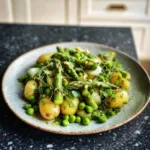
British Spring Salad
- Total Time: 27 minutes
- Yield: 4 servings 1x
- Diet: Vegetarian
Description
A vibrant British Spring Salad featuring Jersey royal potatoes, wild garlic pesto, and fresh spring greens that come together for a delightful and textural meal.
Ingredients
- 500g Jersey royal potatoes
- 150g Frozen broad beans
- 150g Frozen garden peas
- 250g Asparagus
- 75g Wild garlic leaves
- A small handful basil leaves
- 150ml Olive oil
- 20g Pine nuts
- 1 tsp Capers
- 10g grated Pecorino
- Handful of pea shoots
- Cracked black pepper
- Pinch of Maldon Salt
Instructions
- Prepare the wild garlic pesto by blending the pesto ingredients in a food processor until you reach your desired consistency.
- Set the pesto aside covered to prevent oxidation.
- Cook the Jersey royal potatoes in boiling water for 10 minutes until tender.
- Blanch the asparagus, peas, and broad beans in boiling water for 1 minute until just tender, then drain.
- Toss the hot potatoes in 2/3 of the wild garlic pesto to combine flavors.
- Arrange the warm pesto potatoes on a serving platter and top with the blanched vegetables.
- Drizzle the remaining pesto over the salad and garnish with pea shoots, cracked black pepper, and Maldon salt before serving.
Notes
Pair this salad with roasted chicken or crusty bread for a complete meal. Adjust seasonings to taste before serving.
- Prep Time: 15 minutes
- Cook Time: 12 minutes
- Category: Salad
- Method: Boiling and Blanching
- Cuisine: British
Nutrition
- Serving Size: 1 serving
- Calories: 350
- Sugar: 4g
- Sodium: 300mg
- Fat: 18g
- Saturated Fat: 3g
- Unsaturated Fat: 10g
- Trans Fat: 0g
- Carbohydrates: 40g
- Fiber: 6g
- Protein: 9g
- Cholesterol: 10mg