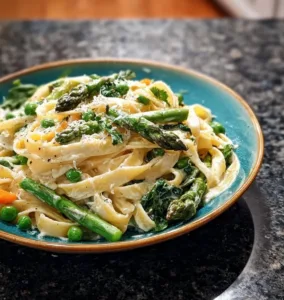
Creamy Fettuccine Alfredo with Spring Vegetables
Bright Spring Pasta Bliss
INTRODUCTION
Hola, my kitchen memories are braided with bright chiles, warm laughter, and the rhythm of hands shaping meals in sunlit spaces. Those early lessons taught me to cook with curiosity, patience, and a love for simple ingredients that sing. I turn seasonal bounty into plates of comfort, like creamy Fettuccine Alfredo studded with asparagus, peas, and bright spinach. Sometimes I make Fettuccine Alfredo for a quick weeknight, other times I slow-simmer the sauce for a lingering dinner that fills the house. If you adore vegetable pasta, the best vegetable lasagna recipe is a cozy companion to try alongside Fettuccine Alfredo.
Quick Recipe Overview
- Prep Time: 10 minutes
- Cook Time: 15 minutes
- Total Time: 25 minutes
- Servings: 4
- Difficulty: Easy
- Cuisine: Italian-American
- Best Season: Spring
Why This Dish Captures Hearts
- Bright seasonal flavors: Spring asparagus and peas add a sweet, grassy lift that keeps the sauce from feeling heavy, making this Fettuccine Alfredo feel light and celebratory. The spinach brightens each bite and adds color that makes the plate sing for spring dinners.
- Silky, comforting sauce: The heavy cream and Parmesan melt into a luxuriously smooth blanket that clings to every strand of pasta, delivering that classic Fettuccine Alfredo mouthfeel. That creaminess comforts without overwhelming thanks to the lively vegetables.
- Easy weeknight elegance: This recipe comes together quickly from pantry and market staples, so it’s perfect for a simple weeknight dinner that still feels special. It’s the kind of meal that impresses guests without demanding hours at the stove.
- Friendly for gatherings: Serve it family-style straight from the skillet and watch everyone help themselves; it’s hearty enough to satisfy but polished enough for casual celebrations. Leftovers also reheat well, making it a practical choice for shared meals.
What You Need for This Pasta
- Fettuccine pasta
- Asparagus
- Peas
- Spinach
- Butter
- Heavy cream
- Parmesan cheese
- Garlic
- Salt
- Pepper
Smart Ingredient Swaps and Signals
- Fettuccine pasta : Swap for tagliatelle or pappardelle if you prefer wider noodles; fresh pasta cooks faster, so watch timing closely.
- Asparagus : Use tender tips for a nicer texture and bright color; if stalks are thick, peel the lower portion to avoid fibrous bites.
- Peas : Fresh peas pop with sweetness, but frozen are terrific and save time; no need to thaw, just add a bit earlier when cooking.
- Spinach : Baby spinach wilts quickly and blends into the sauce unobtrusively; if using mature leaves, chop them so they cook evenly.
- Butter : Unsalted gives you more control over seasoning; browned butter adds a nutty depth if you want an extra layer of flavor.
- Heavy cream : For a lighter dish use half-and-half with a tablespoon of flour to thicken, but heavy cream yields the creamiest, most luxurious sauce.
- Parmesan cheese : Freshly grated Parmesan melts smoothly and gives a pronounced savory bite; pre-grated powders may not melt as well.
- Garlic : Fresh minced garlic has the best aroma; adjust amount to taste and avoid burning to prevent bitterness.
- Salt : Kosher salt dissolves quickly and seasons cleanly; always taste the sauce before adding more.
- Pepper : Freshly cracked black pepper adds brightness and a slight bite; add gradually so it complements but does not dominate.
Step-by-Step Cooking Directions
- Cook fettuccine according to package instructions. Drain and set aside. (Technique note: Reserve a cup of pasta water before draining; the starchy water helps loosen and bind the sauce if needed.)
- In a large skillet, melt butter over medium heat. Add minced garlic and sauté until fragrant. (Technique note: Keep the garlic moving and avoid browning to retain a gentle, sweet garlic flavor.)
- Add asparagus and peas, cooking until tender. (Technique note: Cook asparagus until just tender-crisp so it keeps texture; peas need only a few minutes.)
- Stir in spinach until wilted. (Technique note: Add spinach in batches if needed and stir to incorporate evenly; it will collapse quickly.)
- Pour in heavy cream and bring to a simmer. (Technique note: Gentle simmering prevents the cream from breaking and allows flavors to meld.)
- Stir in Parmesan cheese until melted and the sauce is creamy. (Technique note: Add cheese off the heat to avoid graininess and stir briskly for a silky finish.)
- Season with salt and pepper to taste. (Technique note: Taste as you go; cheeses can add salt, so start modest.)
- Toss the cooked fettuccine with the sauce and vegetables until well combined. (Technique note: Use tongs and a gentle folding motion to coat noodles evenly; add reserved pasta water a tablespoon at a time if the sauce seems too thick.)
- Serve warm, garnished with additional Parmesan cheese if desired. (Technique note: Serve immediately for best texture; pasta will thicken as it cools, so keep it warm until plating.)
Pro Techniques for Silky Sauce
- Control the heat: Keep the cream at a gentle simmer rather than a rolling boil to prevent separation and to let flavors meld slowly. This keeps the sauce velvety and smooth.
- Finish off-heat with cheese: Remove the pan from direct heat before adding Parmesan so the cheese melts into the cream slowly and does not clump. This step is essential for silky texture.
- Use pasta water thoughtfully: A little reserved starchy pasta water loosens the sauce and helps it cling to the noodles; add just enough to achieve the desired consistency.
- Timing the vegetables: Add asparagus and peas first to give them time to become tender while keeping their brightness; spinach should be stirred in at the end to preserve color and nutrients.
Creative Twists to Try
- Vegan version: Swap butter with olive oil, heavy cream with full-fat coconut milk or cashew cream, and Parmesan with a nutty vegan cheese or nutritional yeast for depth. The result will be creamy but with a different savory profile.
- Milder take: Reduce garlic to a single clove and use half the Parmesan, finishing with a squeeze of lemon to brighten the sauce without overwhelming delicate palates. This is great for serving children or those who prefer subtle flavors.
- Spicy variation: Add a pinch of red pepper flakes when sautéing the garlic and finish with a drizzle of chili oil for a warming kick that balances the creaminess. This version pairs well with peppery arugula tossed in at the end.
- Regional twist: Fold in a spoonful of pesto or sprinkle with toasted pine nuts and lemon zest for an Italian countryside feel; add roasted cherry tomatoes for a sun-kissed sweetness that complements the spring vegetables.
What to Serve with This Pasta
- Sides: A crisp green salad with lemon vinaigrette or crusty roasted potatoes provide textural contrast and soak up any extra sauce beautifully.
- Drink: A bright, acidic white wine or a sparkling water with lemon refreshes the palate and balances the dish’s richness.
- Dessert: Finish with a simple citrus sorbet or almond biscotti for a light, contrasting end to a creamy meal.
Prepare Ahead and Save Time
- Prep: Trim asparagus, measure peas, and grate Parmesan ahead of time and store in airtight containers in the fridge for up to two days. Preminced garlic can be kept covered for a day, though fresh is best.
- Store: Keep the cooked sauce and pasta separately if making ahead; store each in shallow containers to cool quickly and refrigerate for up to three days.
- Freeze: The sauce is best fresh but can be frozen without pasta for up to two months; thaw overnight in the refrigerator and reheat gently with a splash of cream or pasta water.
- Reheat: Gently rewarm sauce on low heat, stirring in reserved pasta water as needed before tossing with freshly cooked pasta for best texture.
Plating and Cozy Presentation Notes
- Twirl the fettuccine into nests using tongs for restaurant-style plating, then place the vegetable-topped sauce on each nest for an inviting presentation.
- Garnish with a flake or two of Parmesan and a light grinding of black pepper to add contrast and a subtle aroma that invites everyone to the table.
- Serve on warm plates to keep the sauce silky longer and present with a small bowl of extra cheese for guests who love added richness.
Little Kitchen Tricks for Success
- Warm your serving bowls: Cold plates absorb heat and make the sauce thicken faster, so warm bowls slightly before plating to preserve texture.
- Grate cheese fresh: Freshly grated Parmesan melts more naturally than pre-ground options and elevates the sauce’s flavor and mouthfeel.
- Use high-quality butter: A good butter adds depth and a slightly sweet finish; cultured butter can enhance complexity.
- Salt in stages: Season the pasta water, vegetables, and sauce lightly, tasting as you proceed to build balanced seasoning.
Keeping Texture After Storage
- Microwave + stovetop: Reheat portions gently in the microwave at 50 percent power in short bursts, stirring in a splash of cream or water to loosen. For best results, reheat on the stovetop over low heat, stirring frequently to restore silkiness.
- Texture preservation: Resist the urge to reheat on high; aggressive heat will separate the sauce and make the cream oily. Add liquid gradually and whisk to reincorporate any separated fats.
Questions You Might Ask
Can I make this dish dairy-free?
Yes, you can make it dairy-free by using plant-based butter and a rich cashew cream or full-fat coconut milk, then finishing with nutritional yeast for a savory, cheesy flavor. Use a dairy-free Parmesan alternative or a mix of toasted breadcrumbs and herbs for texture. The mouthfeel will differ slightly but can still be very satisfying.
Will the sauce thicken too much if I store it overnight?
The sauce will firm up in the fridge because fats solidify and pasta absorbs liquid. To refresh, gently reheat on the stovetop and add a splash of cream, milk, or reserved pasta water until the sauce loosens to your liking.
Can I use frozen vegetables?
Absolutely. Frozen peas are ideal and maintain sweetness; frozen asparagus can be used but may become softer, so add toward the end of the cooking process. No need to thaw frozen vegetables first unless they are in large chunks.
Is fresh Parmesan necessary?
Freshly grated Parmesan is recommended because it melts smoothly and imparts a bright, nutty flavor. Pre-grated cheese often contains anti-caking agents and can lead to a grainy sauce. If you must use pre-grated, add it slowly and whisk well.
How can I prevent garlic from burning?
Sauté garlic on medium-low heat and add it after the butter has melted but before it browns; keep it moving in the pan and remove from heat if it starts to brown. Burnt garlic tastes bitter, so careful, gentle cooking preserves its sweetness.
What wine pairs well with this?
A crisp, unoaked white like Pinot Grigio or Sauvignon Blanc offers acidity to cut through the richness, while a light-bodied Chardonnay can complement the creaminess without overpowering the vegetables.
Nutrition Info
- Serving Size: 1 plate (approximate)
- Calories: 650 kcal
- Protein: 20 g
- Carbs: 70 g
- Fat: 32 g
- Fiber: 6 g
- Sugar: 6 g
Nutrition facts are estimates and may vary.
A Note From the Kitchen Table
Kitchen stories are less about perfect techniques and more about the people gathered and the flavors that spark conversation. This Fettuccine Alfredo with spring vegetables is a small celebration of seasonal greens, simple ingredients, and the joy that comes when a comforting sauce meets crisp asparagus and sweet peas. It invites casual sharing, a relaxed table, and the kind of meal that becomes a gentle ritual in busy weeks and slower weekends alike.
Ready to Cook and Share
Give this Fettuccine Alfredo with spring vegetables a try this week, pin it for later, and bring it to your next cozy dinner. Cook it, share it, and enjoy how a simple, creamy sauce can showcase the bright notes of spring produce while making everyone at the table feel a little more content.
Print
Creamy Fettuccine Alfredo with Spring Vegetables
- Total Time: 25 minutes
- Yield: 4 servings 1x
- Diet: Vegetarian
Description
A light and creamy Fettuccine Alfredo featuring bright spring vegetables like asparagus, peas, and spinach, perfect for a cozy dinner.
Ingredients
- 12 oz Fettuccine pasta
- 1 cup asparagus, trimmed and cut into pieces
- 1 cup peas
- 2 cups spinach
- 2 tbsp butter
- 1 cup heavy cream
- 1 cup Parmesan cheese, freshly grated
- 2 cloves garlic, minced
- Salt to taste
- Pepper to taste
Instructions
- Cook fettuccine according to package instructions. Drain and set aside.
- Melt butter in a large skillet over medium heat. Add minced garlic and sauté until fragrant.
- Add asparagus and peas, cooking until tender.
- Stir in spinach until wilted.
- Pour in heavy cream and bring to a simmer.
- Stir in Parmesan cheese until melted and the sauce is creamy.
- Season with salt and pepper to taste.
- Toss the cooked fettuccine with the sauce and vegetables until well combined.
- Serve warm, garnished with additional Parmesan cheese if desired.
Notes
For a lighter dish, consider using half-and-half instead of heavy cream. The sauce can be made in advance and reheats well.
- Prep Time: 10 minutes
- Cook Time: 15 minutes
- Category: Main Course
- Method: Baking
- Cuisine: Italian-American
Nutrition
- Serving Size: 1 serving
- Calories: 650
- Sugar: 6g
- Sodium: 500mg
- Fat: 32g
- Saturated Fat: 16g
- Unsaturated Fat: 12g
- Trans Fat: 0g
- Carbohydrates: 70g
- Fiber: 6g
- Protein: 20g
- Cholesterol: 80mg