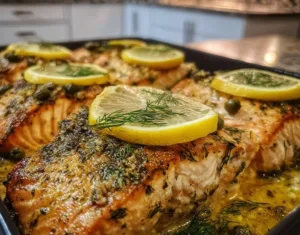
Lemon Dill Baked Salmon: Simple Oven Recipe
Juicy, Herby Weeknight Salmon
INTRODUCTION
A kitchen that smells like citrus and herbs can feel like home anywhere, and that is the spirit behind this Lemon Dill Baked Salmon. Growing up with the comfort of shared meals taught me to celebrate bright flavors and simple techniques, so this Lemon Dill Baked Salmon keeps things fresh, fast, and reliably delicious. The combination of lemon, dill, and capers makes the Lemon Dill Baked Salmon lively and satisfying in every bite. If you love easy dinner ideas that feel a little special, pair this fish with a creamy dessert such as a classic creamy rice pudding for a comforting finish.
Quick Recipe Overview
- Prep Time | 10 minutes
- Cook Time | 12 to 15 minutes
- Total Time | 22 to 25 minutes
- Servings | 4
- Difficulty | Easy
- Cuisine | Modern European with coastal notes
- Best Season | Spring and summer citrus season
Reasons You’ll Fall for It
- Bright, balanced flavor: The lemon zest and juice lift the natural richness of the salmon, while dill adds a fresh green note that keeps each mouthful lively. This is a dish that tastes light without being lacking in depth.
- Effortless weeknight cooking: With just a few pantry staples and about 20 minutes from start to finish, this recipe frees up time for conversation and dessert. It is perfect for nights when you want something impressive but not fussy.
- Versatile for occasions: Bake a tray for family dinner or scale up for a small gathering; the presentation looks elegant on a platter. Guests will notice the aroma before they taste the first forkful.
- Healthy and satisfying: Salmon provides rich omega-3s and silky texture, while the olive oil and capers keep the profile Mediterranean and wholesome. It fills without weighing you down, making it great for lighter menus.
Pantry and Main Ingredients
- 4 fillets Fresh salmon (skin-on for extra crispiness)
- 1 whole Lemon (zest and juice)
- 2 tablespoons Fresh dill
- 2 tablespoons Olive oil (to coat the fish)
- 2 cloves Garlic (minced)
- 1 teaspoon Salt
- 1 teaspoon Black pepper (freshly ground)
- 1 whole Lemon slices (for garnish)
- 2 tablespoons Capers
Ingredient Notes and Swaps
- Fresh salmon : Choose fillets that are firm to the touch with a clean ocean scent; if frozen, thaw fully and pat dry to ensure browning.
- Lemon : Use unwaxed lemons for the best zest; if you only have bottled lemon juice, add a bit more zest for aroma.
- Fresh dill : Dill loses brightness when overcooked; add most of it after baking for peak freshness, or use dried dill sparingly.
- Olive oil : Extra virgin is flavorful and great for coating; avocado oil is a neutral swap if you prefer a higher smoke point.
- Garlic : Minced fresh garlic gives a bright, pungent lift; garlic powder can work in a pinch but lacks the same texture.
- Salt : Kosher salt seasons cleanly; reduce if using a salted butter or brined capers.
- Black pepper : Freshly ground pepper offers essential aroma; if you like heat, add a pinch of red pepper flakes.
- Lemon slices : Thin slices roast quickly and caramelize at the edges, adding visual appeal and concentrated flavor.
- Capers : Rinse brined capers briefly to tame saltiness; they add a pleasant briny pop against the citrus.
Step-by-Step Baking Directions
- Preheat the oven to 400°F and line a baking sheet with parchment for easy cleanup and gentle heat distribution. Position a rack in the center so the fillets roast evenly without drying.
- Pat the salmon fillets dry with paper towels to remove excess moisture and encourage crisp skin. Season the top and sides with salt and freshly ground black pepper, pressing gently so the seasoning adheres.
- In a small bowl combine olive oil, minced garlic, lemon zest, and half the chopped dill; whisk until emulsified. This mixture will cling to the fish and infuse flavor as it roasts.
- Brush the oil-herb mix over the flesh of each fillet, avoiding piling oil under the skin which can prevent crisping. Place the fillets skin-side down on the prepared sheet and tuck lemon slices around or on top as you like.
- Scatter the capers evenly over the fish so each bite has a little briny contrast, and squeeze a touch of lemon juice over each fillet for acidity. This step balances the richness and brightens the final plate.
- Bake for 12 to 15 minutes depending on thickness: aim for an internal temperature of 125°F for medium-rare or 140°F if you prefer a firmer texture. Use a quick thermometer or check for flakiness by inserting a fork at the thickest part.
- Remove from the oven and let the salmon rest on the pan for two minutes to settle the juices; top with the remaining fresh dill to preserve its color and fragrance. Resting helps the fish finish cooking gently without losing moisture.
- Serve warm with extra lemon wedges on the side and a sprinkle of flaky sea salt if desired. Technique note: if you want crispier skin, briefly broil for 1 minute at the end while watching closely to avoid burning.
Pro-Level Technique Notes
- Skin crisping technique: Dry skin is essential, so pat thoroughly and bake skin-side down to concentrate heat on the skin. A short broil at the end adds snap but watch carefully for instant charring.
- Timing for perfect doneness: Salmon cooks quickly; check a couple minutes before the lower bound of the time range for thinner fillets. Removing the fish slightly underdone will deliver a moister result after resting.
- Balancing acidity and fat: Lemon juice brightens but can overwhelm if added too early; add most citrus before serving and a final squeeze at the table for freshness. Olive oil and the natural oils in salmon create a silky mouthfeel that complements the acid.
- Layering aromas: Use zest rather than extra juice for fragrant oils, and add a fresh herb finish so the heat does not flatten delicate flavors. Capers contribute a savory counterpoint that keeps bites interesting.
Flavor Variations to Try
- Vegan swap with tofu: Press and marinate firm tofu in lemon, dill, garlic, and olive oil, then bake until golden and slightly firm. Capers and lemon slices work equally well here, offering the same briny brightness without fish.
- Milder, family-friendly version: Omit the capers and reduce garlic for a gentler profile that suits picky eaters or young palates. Finish with a light drizzle of honey-lemon glaze to add a subtle sweet balance.
- Spicy citrus kick: Add a teaspoon of smoked paprika and a pinch of cayenne to the seasoning mix, and scatter thinly sliced chilies on top before baking. The combination of heat and citrus makes each mouthful lively and layered.
- Regional Mediterranean twist: Add chopped olives, a sprinkle of oregano, and a few halved cherry tomatoes to the baking sheet for a rustic Mediterranean bake. Serve over herbed couscous or short pasta for a heartier meal.
Best Sides, Drinks, and Sweets
- Sides: Serve with lemon-garlic roasted asparagus, a crisp cucumber-dill salad, or buttery new potatoes tossed with parsley. These choices echo the citrus and herb notes while providing contrasting textures.
- Drinks: A chilled glass of sparkling water with lemon or a light white wine substitute like chilled pomegranate or white grape spritzer complements the fish. For nonalcoholic pairing, an iced green tea with a twist of lemon is refreshing.
- Dessert ideas: Keep the meal light with a fruit tart, lemon sorbet, or the creamy rice pudding mentioned earlier to close on a comforting, slightly sweet note.
Prep Ahead and Reheating Guide
- Prep: Mix the lemon-dill oil and mince the garlic up to a day in advance and store covered in the fridge. Zest and slice lemons just before baking to preserve volatile oils.
- Store: Refrigerate leftover cooked salmon in an airtight container for up to 3 days, keeping any sauce or accompaniments separate when possible. Place a paper towel over the fish to absorb excess moisture for better texture.
- Freeze: Wrap cooked fillets tightly in plastic and foil or use a freezer-safe container for up to 2 months; thaw overnight in the fridge before reheating. For raw fillets, freeze uncooked with skin on and thaw thoroughly before baking.
- Reheat: Warm gently in a 275°F oven for 8 to 10 minutes to preserve moisture, or flake and fold into a warm salad or pasta to disguise slight dryness.
Serving and Presentation Ideas
- Plating: Arrange fillets skin-side up on warm plates with a swoosh of lemon-herb oil beneath to catch the juices. Scatter fresh dill and a few capers on top, and place lemon wedges alongside for a bright, restaurant-style look.
- Garnishes: Use microgreens or thinly sliced radishes for color contrast, and a dusting of flaky sea salt just before serving enhances texture. A sprinkle of toasted breadcrumbs or almonds adds a delightful crunch.
- Cozy vibes: Serve family-style on a wooden board or a shallow dish so everyone can help themselves, pairing with shared salads and warm crusty bread. Soft lighting and a pitcher of water with citrus slices complete the relaxed atmosphere.
Little Kitchen Secrets
- Salt early for flavor, but not too much: Season the flesh before baking to let the salt penetrate, but keep caper saltiness in mind to avoid over-salting. Taste any accompanying sauces before adding final salt.
- Use zest for aroma: Zest releases essential oils that perfume the fish in a way juice cannot replicate; add zest to the oil mix and a little extra at the end for punch. Zest also colors the oil in an attractive way.
- Patience pays off: Let the fillets rest briefly before serving so juices redistribute and the texture smooths out. Quick-resting maintains gleam and prevents dryness on the plate.
- Single-pan magic: Roast vegetables alongside the salmon if they share a similar cook time, but give the fish center space so it steams instead of roasts. Slightly larger cut vegetables should be par-cooked first to ensure everything finishes together.
Storing and Texture Tips
- Microwave reheating: If you must microwave, cover the salmon loosely and heat at 50 percent power in 30-second bursts to avoid overcooking. Add a splash of water or lemon to keep moisture from escaping.
- Stovetop reheating: Gently warm flaked salmon in a nonstick pan with a touch of olive oil over low heat for a few minutes, turning once to prevent drying. Finish with fresh dill and a squeeze of lemon to revive flavor.
- Preserve texture: Store sauces and garnishes separately and reapply after reheating to maintain brightness and avoid sogginess. Crisp skin is best enjoyed fresh, so plan to reheat without relying on skin texture.
- Prevent dryness: Undercook by a couple of degrees if planning to reheat; the carryover and reheating will bring it to a comfortable doneness without turning the flesh chalky.
Frequently Asked Questions
How do I know when the salmon is cooked?
Salmon is done when it flakes easily with a fork and the thickest part is opaque but still moist. For precise cooking use a thermometer: 125°F is medium-rare while 140°F is fully cooked. Remove from heat a few degrees before your target as it will continue to cook while resting.
Can I use frozen salmon fillets for this recipe?
Yes, frozen fillets work well if thawed completely and patted dry first to encourage browning. Thaw overnight in the refrigerator for the best texture and drain any excess liquid before seasoning. If cooking from frozen, add a few extra minutes to the bake time and check for doneness.
Are capers necessary, and what do they add?
Capers add a burst of salt and tang that cuts through the richness of the salmon, creating contrast in each bite. They are optional but recommended for balance; rinsing them slightly reduces brininess if you prefer a milder note. Substitute with chopped green olives if needed.
Can I make this ahead for a dinner party?
You can prepare the lemon-dill oil and chop herbs ahead of time, but bake the salmon close to serving for best texture and skin crispness. If you must bake early, reheat gently in a low oven and refresh with fresh dill and lemon. Serving slightly warm preserves delicate flavors better than reheating to hot.
What sides pair best with the lemon dill flavors?
Bright, herb-forward sides like a cucumber-dill salad, roasted asparagus, or herbed new potatoes complement the fish beautifully. Simple grains such as couscous or quinoa tossed with lemon and parsley are excellent companions. Choose a side that echoes the citrus and herb profile for a cohesive plate.
How can I make this recipe more kid-friendly?
Tone down the garlic and omit capers for a milder flavor that kids may prefer, and serve with a buttery potato or simple rice. Add a small drizzle of honey-lemon if a touch of sweetness helps little ones try new flavors. Cut the fillet into manageable pieces before serving.
Nutrition Info
- Serving Size | 1 fillet
- Calories | ~350 kcal
- Protein | ~34 g
- Carbs | ~2 g
- Fat | ~22 g
- Fiber | 0 g
- Sugar | 1 g
- Nutrition facts are estimates and may vary based on specific ingredients and portion sizes.
A Warm Note From the Kitchen
There is something quietly joyful about a simple tray baked with lemon and herbs, a meal that brings people together without fuss. This recipe honors the small rituals of home cooking: zesting a lemon, scattering fresh dill, sharing a warm plate at the table. It celebrates flavor rooted in everyday comforts and invites conversation rather than perfection. May this Lemon Dill Baked Salmon become one of those dishes you reach for on busy nights and special evenings alike, a little beacon of bright, uncomplicated goodness.
Final Encouragement to Cook and Share
Give this Lemon Dill Baked Salmon a try the next time you want a dish that is fast, fresh, and full of personality. Pin the recipe, make it tonight, and share a photo when it turns out perfectly or even when it does not; the act of cooking and sharing is what makes recipes live. Enjoy the citrusy, herby comfort and invite others to savor it alongside you.
Print
Lemon Dill Baked Salmon
- Total Time: 25 minutes
- Yield: 4 servings 1x
- Diet: Healthy
Description
Juicy, herby baked salmon with bright flavors of lemon and dill, perfect for a quick weeknight dinner.
Ingredients
- 4 fillets Fresh salmon (skin-on)
- 1 whole Lemon (zest and juice)
- 2 tablespoons Fresh dill
- 2 tablespoons Olive oil (to coat the fish)
- 2 cloves Garlic (minced)
- 1 teaspoon Salt
- 1 teaspoon Black pepper (freshly ground)
- 1 whole Lemon slices (for garnish)
- 2 tablespoons Capers
Instructions
- Preheat the oven to 400°F and line a baking sheet with parchment.
- Pat the salmon fillets dry with paper towels and season with salt and pepper.
- Combine olive oil, minced garlic, lemon zest, and half the dill in a bowl; whisk until emulsified.
- Brush the oil-herb mixture over the salmon fillets.
- Place the fillets skin-side down on the prepared sheet and tuck lemon slices around them.
- Scatter the capers over the fish and squeeze lemon juice on each fillet.
- Bake for 12 to 15 minutes until cooked to desired doneness.
- Remove from the oven and let the salmon rest for 2 minutes.
- Serve warm with extra lemon wedges and a sprinkle of flaky sea salt.
Notes
For a crispier skin, you may broil for 1 minute at the end of baking.
- Prep Time: 10 minutes
- Cook Time: 15 minutes
- Category: Main Course
- Method: Baking
- Cuisine: Modern European
Nutrition
- Serving Size: 1 fillet
- Calories: 350
- Sugar: 1g
- Sodium: 400mg
- Fat: 22g
- Saturated Fat: 3g
- Unsaturated Fat: 17g
- Trans Fat: 0g
- Carbohydrates: 2g
- Fiber: 0g
- Protein: 34g
- Cholesterol: 70mg